In Greece, a property with unauthorised building works cannot legally change hands until those works are legalised or fall under an exception. A sale that ignores this is void. Every sale, even of a bare plot, needs a certificate from a licensed engineer, so the issue surfaces before the contract, not after.
This guide is general information, not legal or engineering advice. Your engineer and your lawyer confirm what applies to the property you are buying. It is part of our guide to buying land in Kefalonia.
What counts as an unauthorised work?
Anything built or changed without a permit, or beyond what the permit allows. Typical examples are an enclosed balcony, an extension, a storeroom on the plot, a basement turned into living space, or a house larger than its permit. The rules are now in the Spatial and Urban Planning Code, Law 5306/2026, which took over the earlier Law 4495/2017.
Can a property with unauthorised works be sold?
Not as it stands. Article 367 of the Code prohibits, and declares absolutely void, the transfer of a property with unauthorised construction or an unauthorised change of use. The same applies to creating other property rights over it, contributing it to a company, and renting it out.
The main exceptions are:
- works completed before 30 November 1955;
- works already legalised, or brought under the regularisation scheme with the fine paid, or with at least 30% of it paid;
- works exempted from demolition under earlier laws listed in the Code.
Why does even a bare plot need an engineer's certificate?
Because the law asks for one in every sale. Article 368 requires an engineer's certificate, and a declaration by the owner, for any sale or gift of a property, "with or without a building". The engineer certifies one of three things:
- there is no building on the property;
- there are no unauthorised works beyond the permitted coverage, floor area or height, and no unlicensed uses;
- any unauthorised works fall under one of the exceptions above.
The certificate is valid for two months from signing and is filed electronically before the contract. A topographic diagram is also attached, with some exceptions, for example sub-standard, non-buildable plots outside the town plan. Engineers who issue an inaccurate certificate face prison and fines of €30,000 to €100,000, so the check is taken seriously.
For a buyer of land, this means a shed, a stone hut or a half-built house on the plot has to be dealt with before you sign. See inside vs outside the town plan for the rules that decide what may be built at all.
How does regularisation work?
Works completed up to 28 July 2011 can be declared and brought under the regularisation scheme ("taktopoiisi"). A licensed engineer files the declaration and documents in the online system. The Code sorts the works into five categories:
| Category | What it covers | What the owner pays | Result |
|---|---|---|---|
| 1 | Works completed before 9 June 1975 | €250 fee | Permanently exempt from demolition |
| 2 | Works completed before 1 January 1983 | Fee and a special fine | Permanently exempt from demolition |
| 3 | Minor breaches, such as a smaller green area (up to 20%), external insulation or changed openings | €250 fee | Permanently exempt from demolition |
| 4 | Larger breaches within set limits (for example up to 250 m² per home) | Fee and a special fine | Brought under the scheme |
| 5 | Everything beyond categories 1 to 4 | Fee and a special fine | Sanctions suspended for 30 years |
Two points matter for buyers in 2026:
- Category 5 is closed to new declarations since 1 October 2020, apart from special cases. A seller with large unauthorised works cannot simply legalise them now.
- Categories 1 to 4 have a deadline of 31 March 2028, after an extension announced in early 2026.
Works completed after 28 July 2011 cannot be brought under this scheme. They have to be removed, or legalised through a normal building permit where the rules allow it.
In traditional settlements and protected areas, extra rules apply, including review by a committee for each regional unit and, near monuments or archaeological sites, the Ministry of Culture.
Is the fine paid once or every year?
The regularisation fine is set when the works are declared, and once it is paid, sanctions on those works are suspended (Article 384 of the Code). The amount depends on factors such as the area, the zone value of the location and when the works were built. A 40% surcharge has applied to the special fine since 1 October 2024.
Works that are never declared are a different matter: they remain exposed to demolition and to fines both for building and for keeping them.
Can the seller sell before the fine is fully paid?
Yes, once the declaration is filed and at least 30% of the fine is paid. The engineer's certificate must then state that 30% has been paid and the documents uploaded. Some documents, such as a structural adequacy study for certain buildings, can follow within three or five years of the declaration.
Agree in the contract who pays the rest of the fine and completes the file. Your lawyer drafts this; it is not something to settle by handshake.
What should you ask for before you commit?
- Your own engineer's visit. Ask them to compare what is on the ground with the permit and the topographic diagram, and to look for works after 28 July 2011.
- The regularisation file, if there is one. The declaration number, the category and proof of what has been paid.
- The building permit, for any house on the plot.
- Your lawyer's title check, in parallel. See the steps in buying land in Kefalonia.
On PlotX, buyers choose their own lawyer, notary and engineer, and pay a 1% platform fee; sellers pay nothing. Browse plots on the Kefalonia land for sale page.
Frequently asked questions
Can I buy a house with an enclosed balcony that is not on the permit? Only once the works are legalised or brought under the regularisation scheme with at least 30% of the fine paid, or if they fall under another exception. Otherwise the sale is void.
Does a bare plot need an engineer's certificate? Yes. Every sale needs one; for a plot with no building, the engineer certifies that there is no building on it.
How long is the engineer's certificate valid? Two months from the date it is signed.
Can unauthorised works from 2015 be regularised? Not under the regularisation scheme, which covers works completed up to 28 July 2011.
What is the deadline to regularise? For categories 1 to 4, 31 March 2028. Category 5 is closed to new declarations, apart from special cases.
Sources
- Ban on transactions with unauthorised works, Law 5306/2026 art. 367 — taxheaven (in Greek)
- Engineer's certificate for transactions, Law 5306/2026 art. 368 — taxheaven (in Greek)
- Categories of unauthorised works, Law 5306/2026 art. 383 — taxheaven (in Greek)
- Suspension of sanctions after payment, Law 5306/2026 art. 384 — taxheaven (in Greek)
- Documents for regularisation, Law 5306/2026 art. 386 — taxheaven (in Greek)
- Traditional settlements and protected areas, Law 5306/2026 art. 405 — taxheaven (in Greek)
- Category 5 closed since 1 October 2020 — Ecopress (in Greek)
- Extension to 31 March 2028 — To Vima (in Greek)
- Deadline and 40% surcharge — Kefalonia Magazine (in Greek)
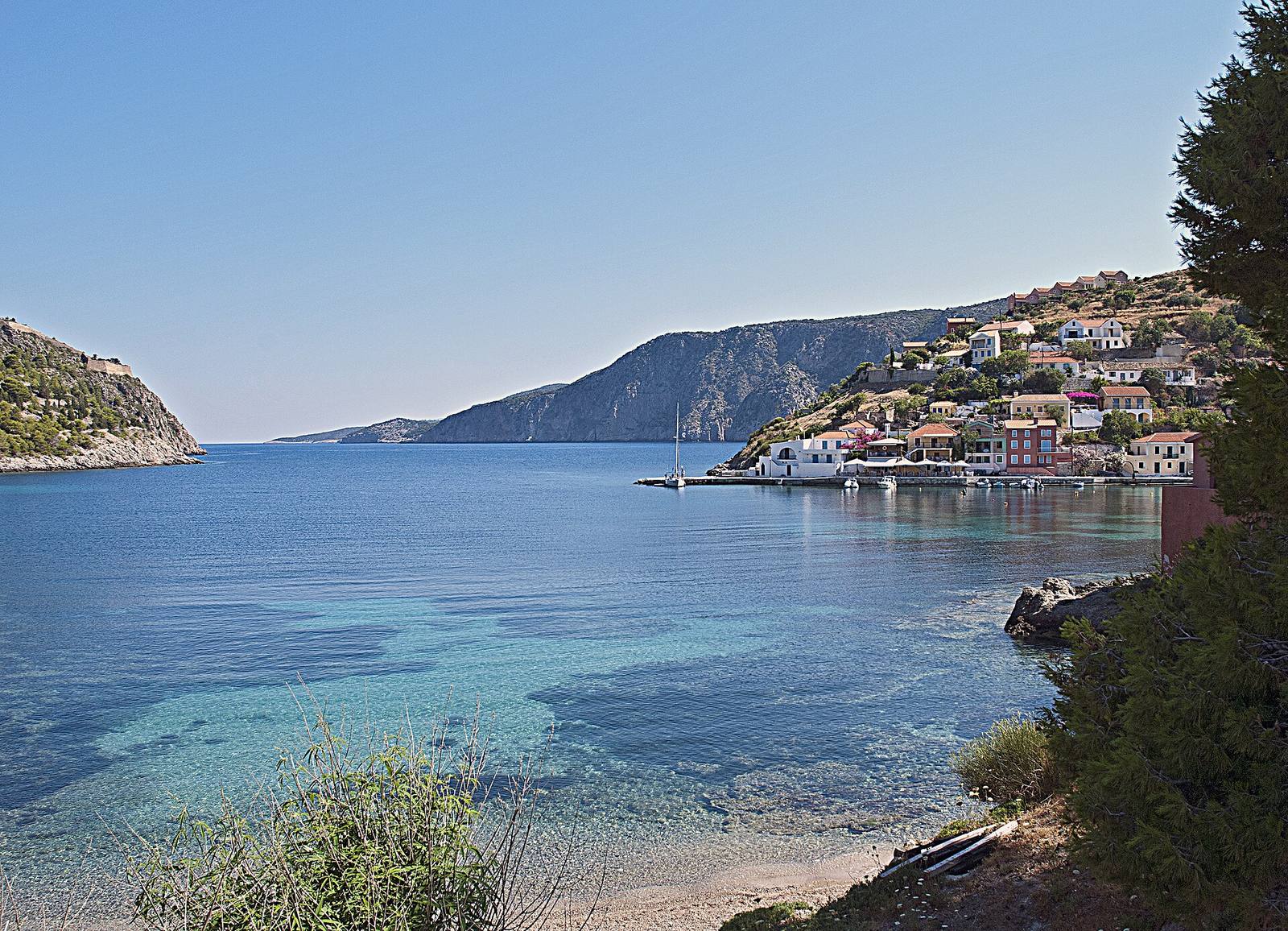
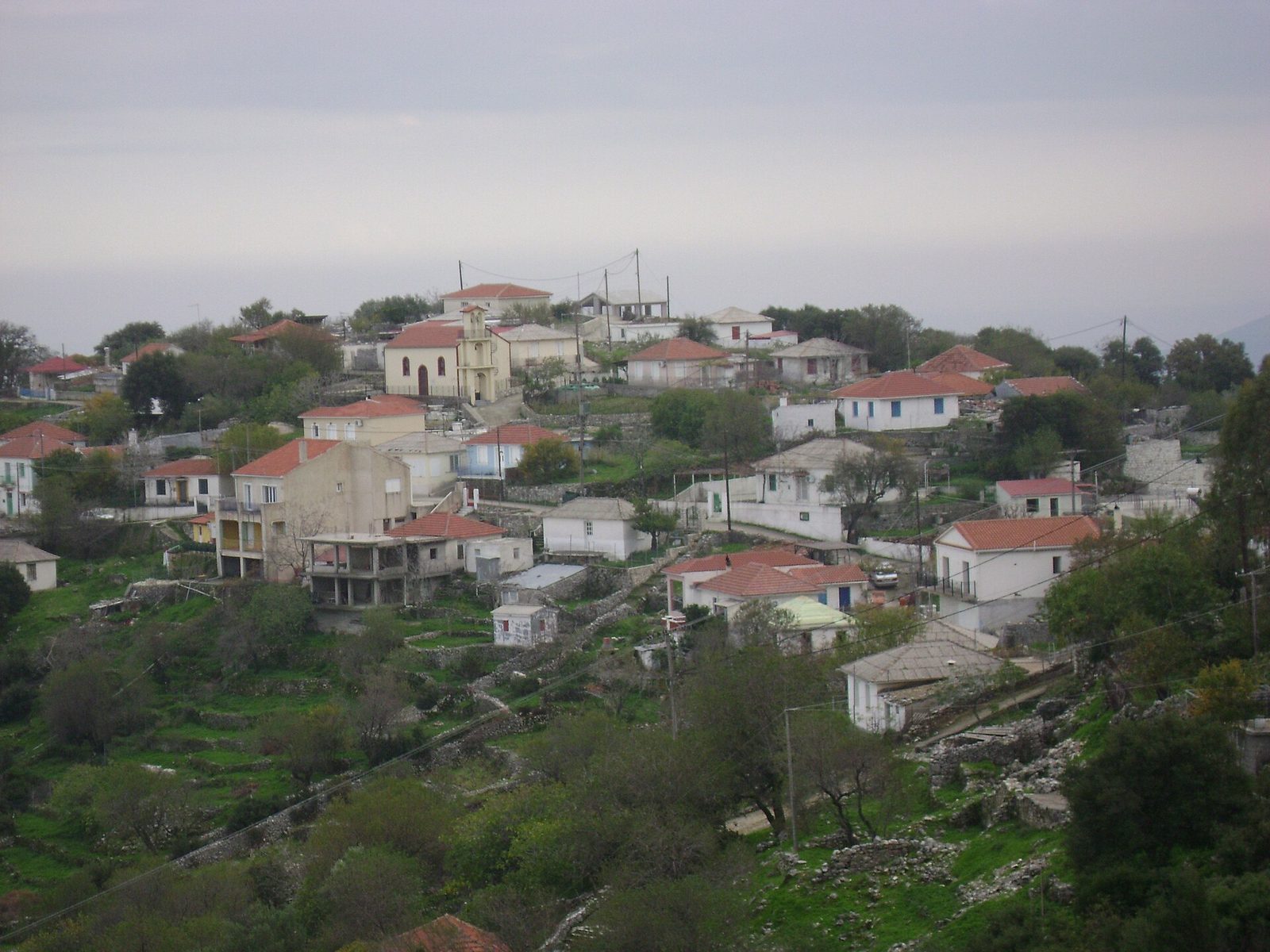
- Cover photo: Neohori Erisos.jpg, Vaso Minetou, CC BY-SA 3.0, via Wikimedia Commons.